Style & details · A Wilshire Wedding guide
Personalized Wedding Details Worth Keeping
Choose meaningful wedding décor, printed details, and keepsakes with a practical guide to readability, proofing, installation, and collection.
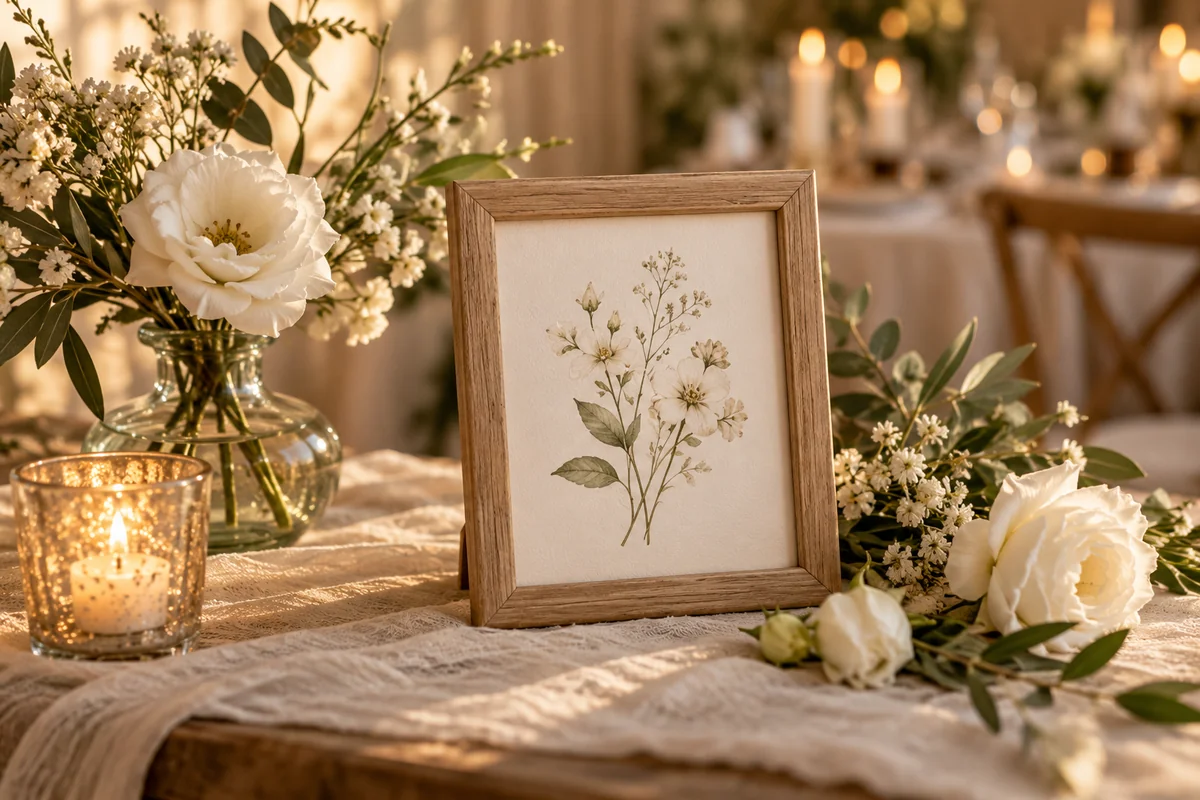
Personal wedding details work best when they have a job. A place card helps someone find a seat. A printed reading makes a ceremony easier to follow. A keepsake records something you want to remember. Choosing details by purpose produces a more coherent celebration than adding a monogram to every available surface.
Begin with one or two elements drawn from your life together: a place, a shared activity, a meaningful line, or a family object. Repeat them lightly across the day. You can create a recognizable thread without giving every table a different story or asking guests to read a long explanation before dinner.
Choose a story small enough to tell clearly
Write a short answer to this question: what would someone close to us recognize as ours? It might be the garden where you spend weekends, a love of cooking, or a city where you met. If the answer needs several paragraphs, choose one specific image or detail from it.
A couple who enjoy walks could use a simple botanical illustration on a ceremony program and preserve the same artwork afterward. People who love hosting might choose handwritten place cards and a family-style menu. The details should make sense even to a guest who does not know the full backstory.
Do not use another culture's ceremonial symbols solely because they look attractive. If a tradition belongs to your family or community, ask how it should be represented respectfully. Personalization can also mean leaving a custom intact, rather than redesigning it for a photograph.
Start with printed items guests actually need
List the information points in the guest journey: arrival, ceremony, seating, meal, and departure. Decide which need printed instructions and which can be handled by a person. One readable seating chart may be more useful than a collection of small signs scattered across the venue.
Use a restrained type system: a clear face for details, with decorative lettering only for short headings if it remains legible. Test a full-size print from the distance a guest will stand. Fine pale text that looks elegant on a laptop may be difficult to read in an evening reception room.
Ask the venue where signs can stand and what fixing methods are allowed. Check stability outdoors and keep displays out of accessible routes. A welcome board is less helpful if its easel blocks the doorway. Our venue planning guide includes questions about access and installation.
Compare the details before you order
| Detail | Useful on the day | After the wedding |
|---|---|---|
| Illustrated ceremony program | Explains the order and readings | Keep one with your vows |
| Personal place cards | Guide guests to their seats | Offer them to guests to take home |
| Framed meaningful print | Creates one personal display | Hang it somewhere already chosen |
| Family photograph display | Introduces people and memories | Return borrowed photographs safely |
| Custom drink stirrers | Mostly decorative | Often discarded; order sparingly |
The table is a planning comparison, not a shopping requirement. If an item does not help guests or hold lasting meaning, it can stay off the list. Think about production time as well as purchase cost. A hundred hand-finished objects can consume evenings you intended to spend on other arrangements.
Make a keepsake with a future home
Before ordering a large framed print, decide where you would put it after the wedding. Check the available wall space, your existing room colors, and the size that would fit. A display created only for the reception may feel awkward when you bring it home.
Possibilities include an illustrated location, a short line from your own vows, or artwork inspired by a shared place. If browsing personalized wall art and prints, compare the actual material, dimensions, proofing process, and delivery terms before ordering. Do not assume any retailer provides a particular wedding service without checking its current product information.
Proof names and dates separately from the artwork review. Ask one person to check spelling and another to compare the design with your instructions. If using a quotation, confirm attribution and permission where relevant. Keep the approved proof with the order confirmation so there is a clear record of what was agreed.
Give family objects a practical plan
An heirloom tablecloth, a photograph, or a piece of jewelry can carry meaning without a new purchase. Ask the owner what handling is acceptable and whether the item can be exposed to sunlight, moisture, food, or transport. Never treat a loan as permission to alter the object.
For fragile items, display a copy or photograph instead of the original when possible. Assign one person to pack and return everything. Use a written inventory and label storage boxes with the owner's name. Sentimental value cannot be recovered through a quick replacement purchase after an item disappears during cleanup.
If honoring someone who has died, decide what feels comfortable to the people closest to them. A quiet photograph or a mention in a reading may be enough. There is no obligation to make grief a public focal point, and guests should not be surprised with an emotionally difficult presentation.
Keep the dining table comfortable
Measure the table before designing its decoration. Plates, glasses, shared dishes, and guests' belongings use more space than a styled empty table suggests. Ask the catering team what must remain clear for service. Tall objects can interrupt conversation if they sit at eye level.
Try a sample setting with all the items you intend to use. Sit down, reach for water, and imagine a server placing a meal. A compact arrangement can look considered while leaving room for people. If candles are part of the design, ask the venue about permitted types and keep any open flame away from paper and fabric.
Favor a few reusable items over individually packaged favors that guests may leave behind. A small thank-you note at the place setting can be personal without another object to carry. If using edible favors, ask the supplier about ingredients and labeling rather than making unverified allergen claims.
Plan production backward from delivery
Find out when the finished pieces need to reach the venue, then allow time for proofing, production, shipping, and a correction if something is wrong. Use the supplier's actual schedule; handmade work and standard printed items may need different lead times. Avoid paying for rushed delivery because the wording was decided late.
Keep guest-dependent printing separate from designs that can be finished early. Welcome artwork can often be approved before the seating plan. Place cards and meal indicators should wait until names and responses are confirmed. Our planning sequence helps separate those dependencies.
Finish with an installation and collection sheet
Photograph each finished display at home and label its destination. Include any stand, frame, clips, or protective packaging in the same box. Say who installs it, when they can enter, and who takes it away. Do not expect a florist, photographer, or caterer to handle personal decoration unless they have agreed.
Create a short list of what to keep, what guests may take, and what returns to a supplier. Ask someone to collect the paper pieces you want preserved before the room is cleared. A single clean program is easier to save early than retrieve from a busy table after dinner.
Personalization succeeds when guests can use it comfortably and you recognize your life in it afterward. For wording that belongs in a keepsake, our wedding message guide can help you write something specific. Choose fewer details, give each a purpose, and leave room for the celebration itself.