People & meaning · A Wilshire Wedding guide
Meaningful Wedding Wishes for the People You Know
Write a personal wedding message with original examples for friends, family, and colleagues, plus advice on tone, blessings, and what to leave out.
A good wedding message sounds like something you would say to the couple in person. Name what you appreciate about them, offer a wish that fits their life, and keep the note comfortable to read. You do not need a famous quotation or a long story to make a card meaningful.
The relationship matters more than the stationery. A close sibling can write about shared memories; a colleague may prefer a short congratulations. A religious blessing belongs in a card when you know it will be welcomed. The original examples below are starting points for your own words, rather than lines that must be copied exactly.
Use a three-part message
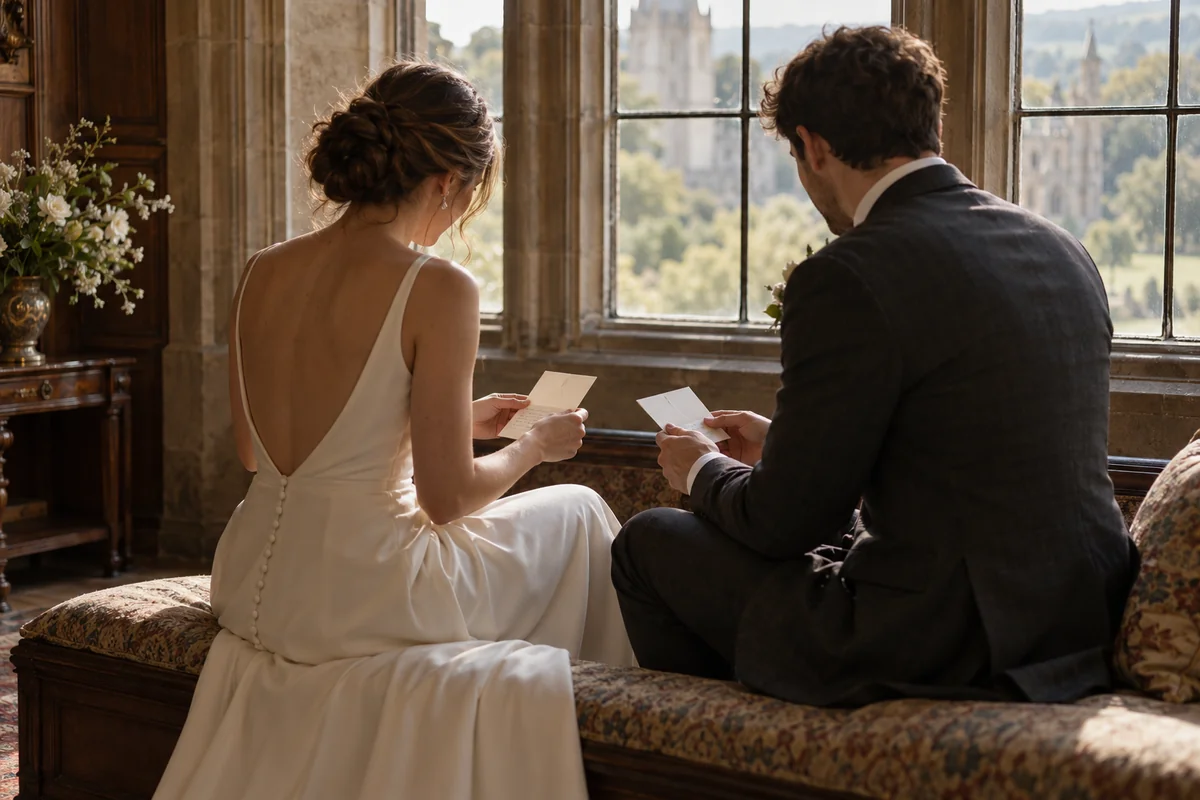
Start by acknowledging the marriage: “Congratulations to you both.” Then add one observation or memory that belongs to this couple. Finish with a forward-looking wish. This simple sequence creates a complete note without turning a wedding card into a speech.
An observation can be small: the way they include a shy friend in conversation, how they share responsibility when hosting, or their enjoyment of ordinary weekends. Specific details are more believable than describing every relationship as perfect. Choose something both people will recognize and that you are comfortable putting in writing.
For example: “Congratulations, Sam and Robin. I love how your home always has room for one more person at the table. Wishing you many years of that same warmth, good conversation, and care for each other.” The detail gives the wish a reason to belong to them.
Short wedding wishes that still feel personal
So happy to celebrate you both. May your life together hold plenty of laughter, patience, and ordinary days you love.
Congratulations on your marriage. Wishing you a home full of kindness and a partnership that leaves room for both of you to grow.
What a lovely beginning to your next chapter together. May you keep finding joy in the small things you already share.
With warm congratulations to you both. Wishing you friendship, steady support, and many happy meals around your own table.
Short messages work well in a guest book where space is limited or when several people are signing one card. Add the couple's names and your own signature. If you know only one partner, address both of them rather than writing as though the other person is a supporting character in the wedding.
Do not judge the message by its length. A few thoughtful lines can be more welcome than a crowded page. If the card accompanies a gift, avoid discussing its price or explaining why you did not choose something more expensive. The note is about the marriage, not an accounting of the gift.
For a close friend
Choose a memory that shows affection without exposing private information. The first dinner at which you met their partner, a shared journey, or an ordinary moment of generosity can work. Avoid retelling an embarrassing dating story simply because it gets a laugh among friends.
“Watching you and Casey turn a rainy weekend into a kitchen full of friends told me so much about the life you are building. I am happy to be here for your wedding and even happier to see you so at ease together. Wishing you a marriage full of that same welcome.”
If your friend has been through a difficult time, keep the focus on this celebration. Do not contrast the new partner with an ex or describe the marriage as a rescue. A supportive sentence can acknowledge your joy without reopening a story they may not want associated with their wedding day.
For a sibling or family member
Family messages can recognize the history you share while welcoming the new partner. Mention a quality you admire in your sibling and a connection you appreciate in the couple. Avoid making the note a competition over who knows them best.
“Taylor, your ability to make people feel at home has always been one of my favorite things about you. Morgan, it is wonderful to see the warmth you bring to each other's lives. I am proud to celebrate you both and look forward to the family memories still to come.”
A parent may want to express pride, but should leave room for the couple's independence. Rather than offering unsolicited rules for marriage, describe your continuing support. If family relationships are complicated, a simple respectful congratulations is enough; the wedding card is not a good place to settle an old disagreement.
For a colleague or someone you do not know well
Warmth does not require familiarity you have not earned. Keep a work-related message pleasant and direct. A note such as “Congratulations to you and Avery. Wishing you a joyful celebration and a happy life together” is appropriate when you have not met the partner.
If signing a group card, write a distinct sentence and your name rather than repeating the longest message already on the page. Avoid workplace jokes about someone taking time off, becoming unavailable, or finally settling down. The couple should be able to keep the card without needing to explain the office context.
Religious blessings and cultural language
Use religious wording when it matches the couple's beliefs or when they have invited that kind of blessing. Do not assume a ceremony location reveals both partners' beliefs. A secular wish for kindness and companionship can be heartfelt without borrowing language that may feel uncomfortable to them.
If writing in a language you do not speak fluently, ask someone you trust to check the meaning and tone. Literal translations can sound more intimate or formal than intended. For a broader range of phrasing, wishes, greetings, and blessing ideas can offer starting points; adapt them to the people receiving your note.
When a quotation or traditional blessing has a known author or cultural source, credit it accurately. If you cannot verify its origin, choose your own sentence instead. Original language avoids misattribution and gives you room to speak in your normal voice.
When you cannot attend
Send your congratulations without letting your absence dominate the message. Explain briefly if appropriate, then turn attention back to the couple. “I am sorry I cannot celebrate in person, but I will be thinking of you both. Wishing you a joyful day and a marriage filled with friendship and care.”
Do not promise a visit or celebration you have not arranged. If you would like to catch up later, suggest it separately after the wedding. Avoid asking the couple to organize a video call during their day unless they have already offered one. A card received before or shortly after the celebration can express support on its own.
Dreams, memories, and private symbolism
Some couples attach meaning to a place, a repeated image, or even a dream they have shared. You can refer to that story if they have told it openly and would appreciate the mention. A wedding card should not interpret someone's private feelings for them or predict their future.
If dreams are part of your personal reflection, reading about dream symbolism may provide creative prompts for journaling. Interpretations are subjective and should not be presented as evidence about a relationship. In a card, a real shared memory will usually communicate affection more clearly than an unexplained symbolic claim.
What to leave out of the card
Skip jokes about divorce, money, arguments, or one partner being difficult. Do not comment on fertility, ask about children, or assume that marriage changes anyone's name. Avoid comparing this wedding with another person's celebration. Even affectionate teasing can read differently when the couple revisits the card years later.
Read the finished message aloud once. Remove any sentence that sounds like advice you were not asked to give. Check both names and sign clearly. If including cash or a gift card, follow the couple's stated arrangements and hand it to the designated person rather than leaving it unattended.
For notes used on invitations rather than congratulations cards, see our wedding invitation wording guide. To turn a message into a lasting display, the personalized wedding keepsake guide explains how to choose details worth preserving. A meaningful wedding wish begins with attention to the couple; the format comes afterward.